March 10, 2026
Teacher Wellbeing Is a System Responsibility, And It’s Time We Measure It

Selma Talha-Jebril
Director of Research, WISE

Shahd Dauleh
Manager, Innovation and Testbed Innovation, WISE
Teacher Wellbeing Is a System Responsibility
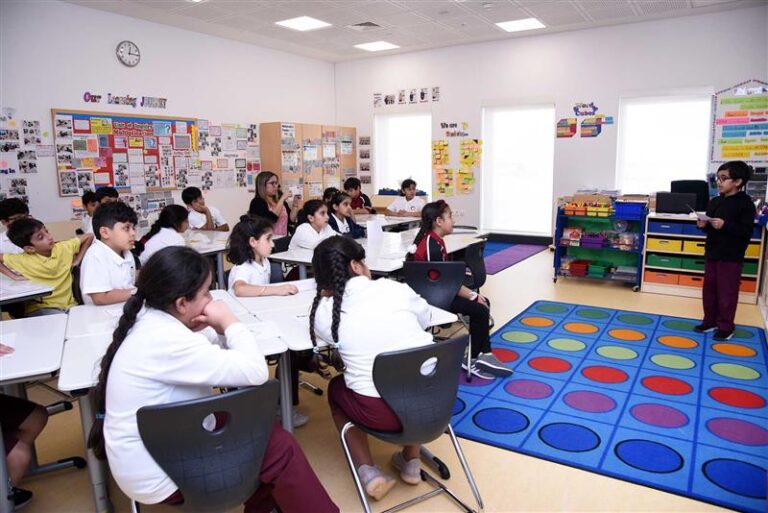
In recent days, as schools across Qatar have shifted to remote learning and communities navigate a period of regional uncertainty, teachers have once again stepped quietly into a stabilizing role.
Teachers provide more than instruction during moments of disruption. They provide continuity. They maintain routines, create spaces for reassurance, and help children process a world that suddenly feels less predictable.
In times like these, education systems often rely on the same quiet assumption: that teachers will hold things together. And very often, they do.
But the way we talk about teacher wellbeing rarely reflects this reality. Too often, it is framed as an individual responsibility — something teachers must manage through personal resilience, self-care, or professional dedication.
Resilience, however, is not a policy.
Across the world, the factors that most affect teacher wellbeing are not personal traits but system conditions: workload, access to professional support, leadership culture, clarity of expectations, and the resources available in schools. When these conditions are strong, teachers thrive. When they are weak, no amount of personal resilience can compensate.
If teacher wellbeing is shaped by systems, then it must also be treated as a system responsibility.
And like any other core function of an education system, it should be understood, monitored, and improved through deliberate policy and evidence.
Yet this is where a major gap appears. While many (though by no means all) education systems rigorously track student learning outcomes, far fewer attempt to measure the system conditions that make those outcomes possible in the first place.
Teacher wellbeing is one of the most important of those missing indicators.
Importantly, wellbeing is not separate from learning outcomes. Research consistently shows that teacher wellbeing influences classroom climate, student engagement, and ultimately student learning. When teachers are overwhelmed or unsupported, the effects ripple across the entire learning environment.
If we want resilient education systems, we must not rely on resilient teachers alone.
Instead, we must design systems that actively support the people who sustain them. That means embedding teacher wellbeing into policy decisions about working conditions, resource allocation professional development and school leadership.
In short, teacher wellbeing should not depend on extraordinary individual effort. It should be built into the everyday functioning of education systems.

When Crisis Hits, Teachers Hold the Line. But Who Holds Them?
Across parts of the Gulf countries today, fear and disruption have entered daily life. Precautionary measures, shifts to remote work, and temporary school closures have reminded communities how quickly normal routines can change when regional tensions rise.
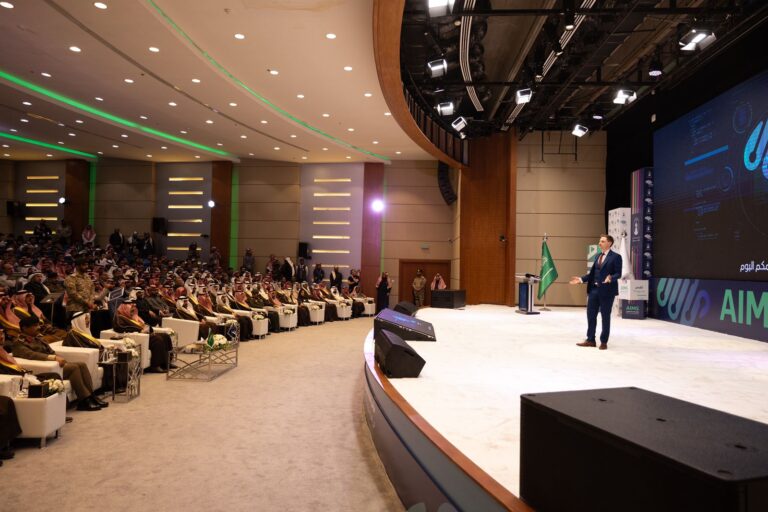
Encouragingly, recent events in Qatar have demonstrated what meaningful support can look like. During the temporary shift to virtual learning, the Minister of Education and Higher Education, H.E. Lolwah bint Rashid Al Khater, joined an online classroom alongside members of the cabinet to show solidarity with teachers and students.
The gesture was simple but powerful.
By entering the digital classroom, national leadership sent a clear message: even when circumstances force learning to move online, education, and the wellbeing of those who sustain it, remains a national priority.
This kind of leadership matters.
Research increasingly confirms what educators have long understood intuitively: teacher wellbeing is deeply connected to the quality of learning environments.
At WISE, our work on wellbeing, here and here, has shown that when teachers feel supported, respected, and psychologically safe, the benefits ripple outward, to students, classrooms, and entire school communities.
Yet a striking paradox remains in education policy.
Teacher wellbeing is rarely monitored with the same rigor.
If wellbeing is truly a system responsibility, it must also become something systems actively measure and track.
When wellbeing goes unmeasured, education systems miss critical warning signs. Burnout, emotional fatigue, and professional isolation rarely appear overnight; they build gradually. Without indicators that capture teachers lived experiences, workload pressures, professional trust, access to support systems remain reactive rather than preventative.
This gap becomes especially visible during moments of crisis.
New approaches to measuring the effectiveness of education systems are beginning to emerge. The WISE Education Index, currently under development, seeks to move beyond traditional models that focus solely on outputs. Instead, it aims to capture the broader system of conditions that enable learning: governance, institutional trust, digital readiness, and critically, the wellbeing environment in which teachers work.
By integrating indicators that reflect teacher experience, education systems can begin by asking more meaningful questions:
“Are teachers adequately supported during periods of stress or disruption?”
“Do institutions foster professional trust and autonomy?”
“Are there mechanisms to detect and address burnout before it undermines learning?”
At a time when societies across the region are navigating uncertainty, it is worth remembering a simple truth: education systems are not sustained by infrastructure alone. They are sustained by people.
And if we want education systems that can withstand crisis and prepare learners for the future, we must start measuring, and protecting, the wellbeing of the teachers who make learning possible.
As mothers and education professionals, we write this with a deep appreciation for the teachers who support our children every day. Their wellbeing is not a secondary concern. It is central to the strength and resilience of the education systems we all depend on.
—
Teacher wellbeing matters—and your experience matters too. In April, we’ll share a short, anonymous survey with our community as part of the State of Changemaker Wellbeing Survey, a global study led by The Wellbeing Project in partnership with the Center for Healthy Minds at the University of Wisconsin–Madison.
The study explores wellbeing, burnout, resilience, and purpose across the social change sector. It takes about 10 minutes, is available in 12 languages, and is completely voluntary and anonymous. If you are interested in participating, sign up through this link and look out for it in your inbox on April 13: https://wellbeing-project.org/state-of-changemaker-wellbeing-survey/