April 12, 2026
Knowing Learners Before Teaching Content Humanity, Pedagogy, and Technology in the Age of AI

Luqmaan Sidat
Teacher, Qatar Academy Al Khor
Successful teaching is often framed through what can be measured: attainment data, learning objectives, benchmarks, and progress indicators. These tools play a significant role in planning and accountability. Yet many of the most formative moments in an educator’s professional growth do not emerge from spreadsheets or reports, but from encounters that challenge assumptions about what it truly means to know our learners and to understand their learning beyond what data alone can reveal.
Early in my career, I experienced such a moment when a student came to me visibly upset. As they shared their concern, I realized there was something deeply important in their life that I did not know. What stayed with me was not the specific circumstance itself, but the uncomfortable truth that I, as their teacher, had missed part of their story. Despite knowing their test scores, progress, and work habits, I had overlooked an important part of their life that had been quietly shaping their experience in the classroom.
This was a call to attention to looking beyond the students who sat in front of me. Despite knowing their test scores, progress, and work habits, I realized I might have been overlooking an important part of their life that had been quietly shaping their experience in the classroom.
That realization made me pause and ask myself a difficult question: how many more stories in this classroom do I still not see?
As educators, we are highly effective at collecting evidence of learning. We track performance, analyze behavior, and identify gaps. These practices serve important purposes. However, they can also create an illusion of knowing. To truly know a learner is not only to understand how they perform academically, but to understand who they are, what they value, and how they experience the world.
Data and evidence of learning cannot be separated from identity, emotion, culture, and relationships.
From that experience emerged a principle that has guided my teaching ever since: we cannot educate learners we do not truly know. Before we teach content, we must understand the context. Before we focus on outcomes, we must recognize the human being in front of us.
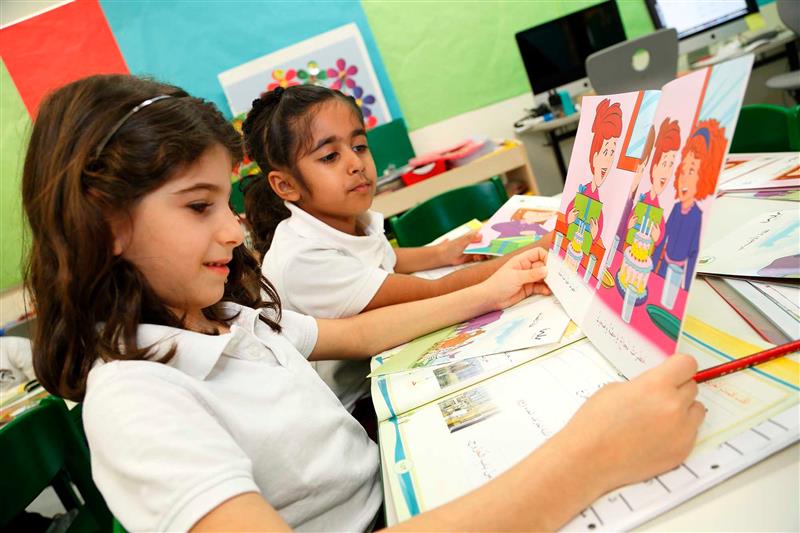
This principle continues to shape my teaching. In one instance, I became aware that a student in my class came from a nearby village. I used AI to generate a reading comprehension task set in that village. The change was simple, but the impact was noticeable. The student’s motivation increased, and his engagement deepened as he recognized aspects of his own world within the text. The academic demand remained the same. What changed was relevance.
Such moments illustrate an often overlooked truth: effective differentiation is not only about adjusting levels or complexity. It is also about adjusting the meaning. When students recognize themselves in learning materials, they are more willing to invest in effort and take risks.
Relationship-building also shapes classroom culture in powerful ways.
Over time, I have learned that small relational gestures accumulate meaningful shifts in engagement and behavior
. Using humor, referencing cultural touchpoints students recognize, and drawing on their interests helps students feel seen. In the context of the IB’s Primary Years Program (PYP), I have found that adapting English and mathematics questions to include local places, familiar names, and culturally relevant scenarios can make learning more meaningful for students. These adjustments may appear minor, but they signal to learners that their identities and experiences matter, that they have a place within the classroom.
As digital technologies, particularly artificial intelligence, become more visible in education, this commitment to knowing learners has become even more important. Much of the public conversation around AI focuses on efficiency, automation, and productivity. While these possibilities are real, they are not pedagogical goals in themselves.
The central question is not simply what AI can do, but how it improves the human experience of learning.
My interest in AI has never centered on replacement. Instead, I have explored how it might support professional judgement when used carefully and intentionally. In my classroom, students have used AI tools to research facts related to units of inquiry, improve the quality of their writing, explore challenging mathematical concepts, and evaluate their own understanding.
One pattern quickly became apparent. After discussing with students how AI should be used ethically and responsibly, they realised that they did not need to turn to it to avoid thinking. Instead, they began using it to support their thinking in diverse ways. They identified gaps in their knowledge, asked more precise questions, and revised their work with greater independence. What stood out most was that AI did not replace their creativity; in many cases, it helped unlock their imagination.
This became especially clear during a narrative writing unit. I introduced a model text, generated using AI, about a Palestinian boy who had migrated to Qatar and was trying to find his place while adapting to a new culture, school, and language dialect. As I read it to my students, I noticed them leaning forward. They connected with the emotions immediately. Some related to the experience, and many saw aspects of themselves reflected in the story. Soon they began sharing their own experiences of travelling to new countries, learning unfamiliar languages, feeling different, and searching for belonging. What began as a simple prompt quickly grew into a conversation about identity, adjustment, and connection.
In that moment, it became clear that the real power of AI in education is not in generating content, but in creating opportunities for connection.
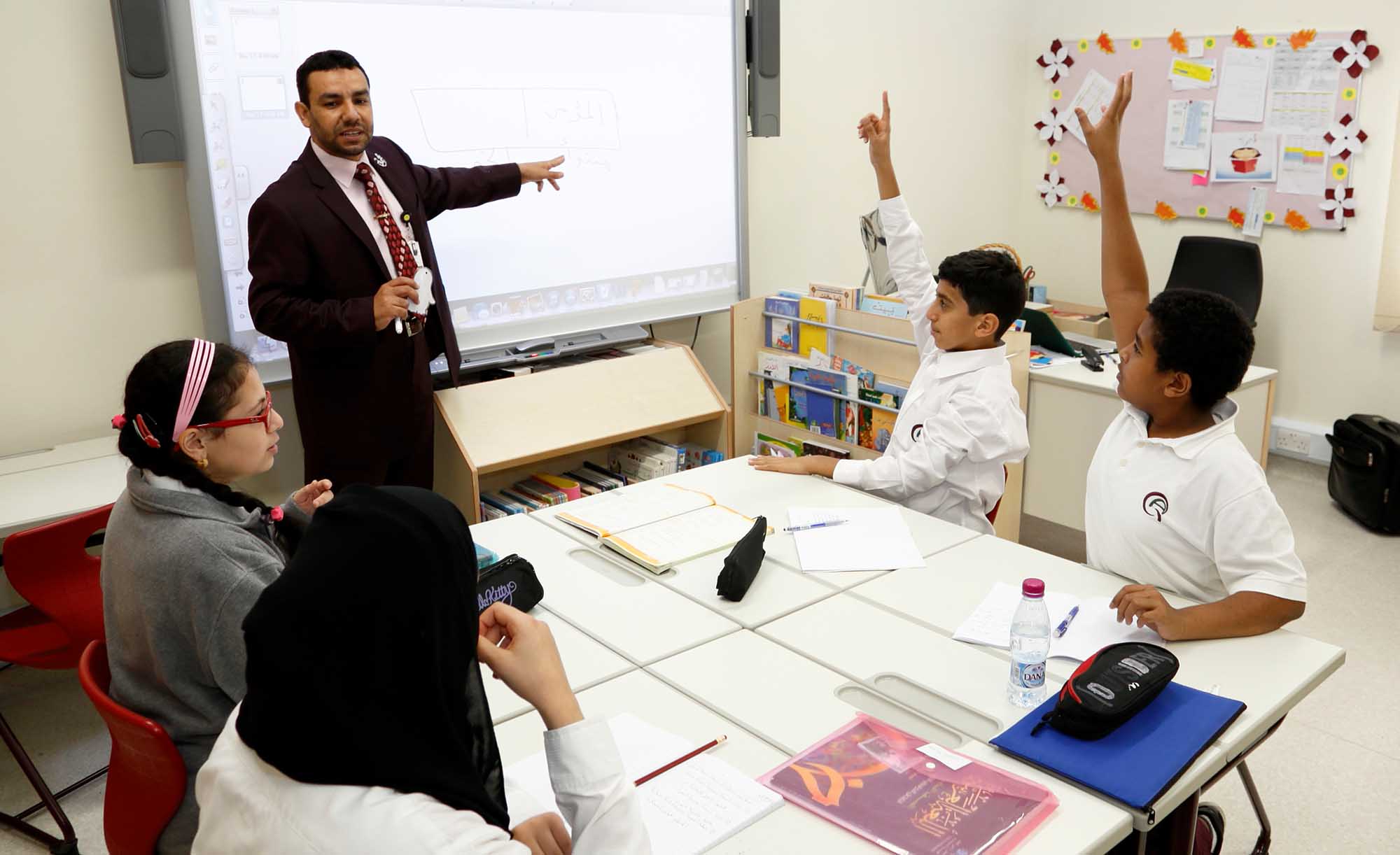
This distinction is important. Technology can generate content, but it cannot generate understanding and meaning the way a human interaction, such as with a teacher or a peer, can. Only teachers can give that content meaning. Meaning emerges through dialogue, discussion, and human interaction which are elements of learning that no algorithm can replicate.
For technology to genuinely support learning, certain conditions must exist. Teachers need time to explore tools without performative pressure. They need trust from leadership, governing entities, and the wider education system to decide when technology is helpful and when it is not. They need training that is practical, grounded, and connected to real classroom contexts. Without these foundations, technology risks driving pedagogy rather than serving it.
These conditions are not primarily technical; they are cultural. They reflect whether education systems view teachers as implementers of external solutions or as knowledgeable professionals capable of informed judgement.
Sustainable innovation emerges when teachers are positioned at the center of learning.
At its core, teaching is relational work. Teachers must protect human interaction, empathy, emotional intelligence, motivation, and a love of learning. Classrooms must remain safe, human spaces where students are known beyond their grades. Dialogue, discussion, and storytelling are not optional extras; they are central pedagogical acts.
Artificial intelligence can collect data, analyze patterns, and make predictions. But it cannot truly know our learners. It cannot notice quiet moments, recognize emotional shifts, or respond with care. It cannot challenge, motivate, or push a student in the way a teacher can. That capacity rests with teachers.
As technology continues to advance, the challenge facing education is not how powerful our tools will become, but how thoughtfully we choose to use them. If innovation is to strengthen learning rather than reshape it in unintended ways, it must remain guided by professional judgement and human relationships.
The lesson I learned from that early moment in my classroom remains true today: teaching begins with knowing our learners.
As we look toward the classrooms of tomorrow, the question becomes this: how do we ensure that innovation serves teachers, rather than allowing technology to dictate teaching for innovation’s sake?